

Toe separators for pedicure services do one simple job: keep toes apart so fresh polish can dry without smudging. But the separator you choose affects more than the finish. It changes how comfortable your client feels in the chair, how quickly you can work, and how much synthetic waste leaves your salon at the end of the day.
Most salons default to foam. More nail techs are switching to cotton. Here is how the options compare, and how to get the most out of cotton toe rope.
What Do Toe Separators Do in a Pedicure?
Toe separators hold the toes slightly apart during polish application and drying. That space lets you reach every nail cleanly, keeps wet polish from touching neighboring toes, and helps the client stay still and comfortable while the polish sets. They are used once and thrown away, so they are one of the disposables you will go through fastest at a busy pedicure station.
Types of Toe Separators for Pedicure Services
Foam Toe Separators
Foam toe separators are the familiar molded pieces with four or five holes. They are inexpensive and quick to slip on. The downside is fit: they come in fixed sizes, so they can pinch small feet, sit loosely on larger feet, and push toes into an unnatural spread. Most disposable foam separators are made from synthetic foam.
Silicone and Gel Toe Separators
Silicone and gel separators are soft and flexible. They are often sold for comfort or foot-health use at home. In a salon, a separator that is meant to be reused has to be cleaned and disinfected between clients, which adds a step many salons would rather avoid.
Cotton Toe Rope
Cotton toe rope is a soft rope of cotton that you weave between the toes. Because you shape it to each foot, it fits small and large feet equally well, sits gently against the skin and holds toes apart without forcing them. Intrinsics Toe Rope comes in 6" lengths, so one rope covers one foot, or you can cut it shorter for petite feet.
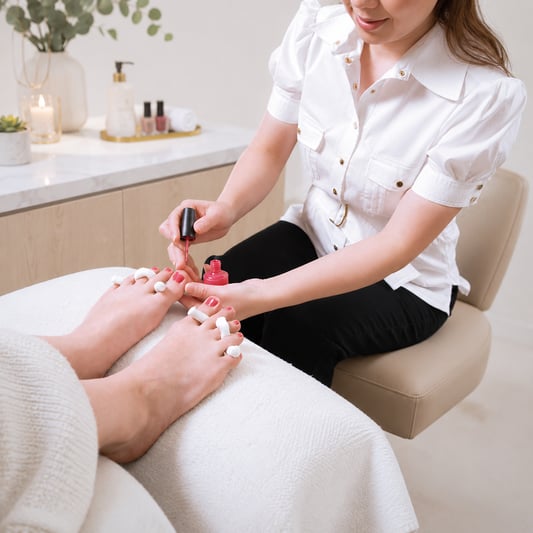
Cotton vs. Foam Toe Separators: Side by Side
| Cotton toe rope | Foam toe separators | |
|---|---|---|
| Fit | Shapes to any foot size | Fixed sizes; can pinch or slip |
| Comfort | Soft, flexible cotton | Firmer; can feel bulky |
| Material | Natural, plant-based fiber | Synthetic foam |
| Hygiene | Single-use; discard after each client | Single-use; discard after each client |
| Storage | Flat, compact box | Bulky bags |
| Best for | Comfort-focused and eco-conscious salons | Lowest upfront cost |
Why Cotton Fits an Eco-Conscious Salon
You want an eco-friendly practice, but pedicures depend on single-use disposables. That is less of a contradiction than it sounds. The question is not whether you throw a separator away, but what it is made of when you do.
Biodegradable. Cotton is a natural fiber, so it can be broken down by natural, biological processes. Most foam separators are made from synthetic, oil-based materials that are not designed to break down the same way. How quickly cotton degrades depends on conditions: it breaks down fastest in compost and more slowly in sealed landfills, but it does break down over time.
Renewable. A cotton crop grows in about eight to nine months. By comparison, the trees used to make rayon take 15 to 20 years to mature.
Durable. Quality cotton holds up to the job, so you are not doubling up or replacing disposables mid-service. Fewer pieces per client means less waste overall.
Switching from foam toe separators to cotton toe rope is one of the simplest changes a salon can make. It fits naturally alongside the other environmentally friendly spa products many salons already use, and cotton rope takes up less room on your station than bags of foam.
How to Use Toe Rope in a Pedicure
- Finish prep first. Complete the soak, nail shaping, cuticle work and polish removal before you add the rope.
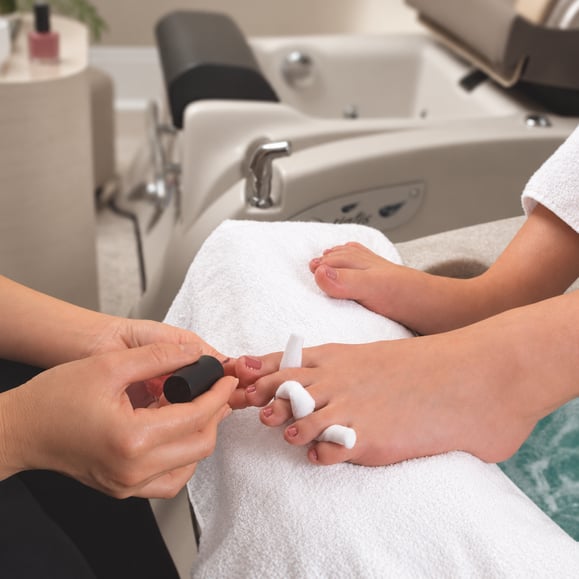
- Weave the rope. Starting at the big toe, pass the rope over and under each toe so there is a soft loop of cotton between every toe.
- Adjust the fit. Gently tighten or loosen the weave so toes are separated but relaxed. Cut the rope shorter for small feet.
- Polish. Apply base coat, color and top coat with clear space around every nail.
- Let polish set, then remove and discard. Slide the rope out once polish is dry to the touch, and throw it away. Use a fresh rope for every client.
Tip: tuck the loose end of the rope under the little toe so it stays out of the way while you polish.
How Many Toe Separators Does Your Salon Need?
Plan on one rope per client (one per foot if you prefer separate ropes). A box of 200 Intrinsics Toe Rope pieces covers about 200 pedicures. A salon doing 15 pedicures a day will use about 75 a week, so most salons keep at least one spare box on hand and reorder before they open the last one.
Toe Separator FAQs
What are toe separators for pedicure used for?
They keep toes apart while polish is applied and dries, so the nails are easier to reach and wet polish does not smudge on neighboring toes.
Are cotton toe separators better than foam?
Cotton toe rope shapes to any foot, feels softer against the skin and is a natural fiber. Foam separators cost less up front but come in fixed sizes. Both are single-use.
Can toe separators be reused between clients?
No. Porous separators such as foam and cotton are single-use. Discard them after each client and follow your state board of cosmetology rules.
How long should toe separators stay on after polish?
Keep them in until polish is dry to the touch, usually a few minutes after top coat, then remove them carefully.
Can I cut toe rope to size?
Yes. Cut it shorter for small feet, or into smaller pieces to place between individual toes.
Try Intrinsics Toe Rope
Intrinsics Toe Rope gives every client a soft, custom fit and gives your station a cotton alternative to foam. See Toe Rope, explore our full list of tools for pedicure services, or find a distributor near you.